What Metabolism Really Is (And Why Most Advice Is Wrong)
5/8/20244 min read


Most people think metabolism is about burning calories.
Eat less, move more, speed it up, slow it down.
That idea sounds simple—but it’s also why so many people feel stuck, tired, and frustrated despite “doing everything right.”
Metabolism isn’t just about how many calories you burn. It’s about how your body uses fuel. When that system works well, energy is steady, hunger is manageable, and weight regulation feels easier. When it doesn’t, everything feels harder than it should.
At MetaFuel, we focus on understanding that system—because once you understand it, you can improve it.
What Metabolism Actually Is
Metabolism is the sum of all the processes that keep you alive and functioning. That includes:
Turning food into usable energy
Deciding whether to burn or store fuel
Regulating blood sugar
Managing hormones
Maintaining muscle, organs, and body temperature
In simple terms:
Metabolism is how your body converts fuel into energy and decides what to do with it.
It’s not a single switch. It’s a coordinated system involving your liver, muscles, fat tissue, brain, and hormones—especially insulin.
This is why two people can eat the same amount of food and have very different results. The difference isn’t willpower. It’s how their metabolism handles the food.
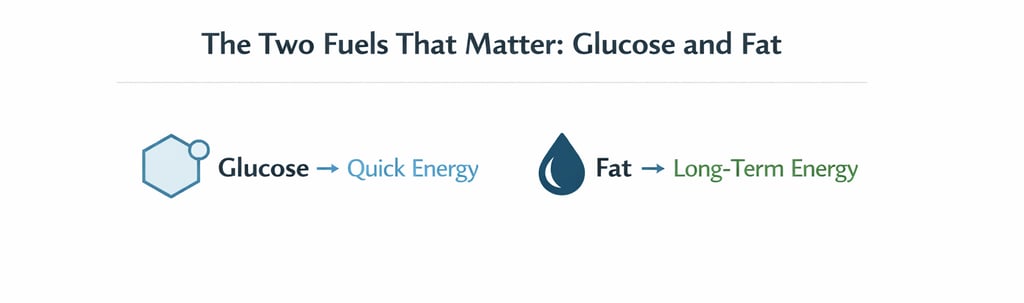
The Two Fuels That Matter: Glucose and Fat
Your body mainly runs on two fuels:
Glucose
Comes from carbohydrates or (sugar)
Fast and efficient
Limited storage (means the body does not store a lot of glucose, it turns it into fat to store it)
Raises insulin
Fat
Comes from dietary fat and body fat
Slower but long-lasting
Stored in large amounts
Can be used without insulin spikes
A healthy metabolism can switch between these fuels depending on availability and demand. This ability is often called metabolic flexibility.
Problems arise when the body becomes overly dependent on glucose and struggles to access fat—even when plenty of fat is available.
That’s not a calorie problem. It’s a fuel-use problem.
Why “Slow Metabolism” Is Usually the Wrong Diagnosis (Very Important)
Many people believe they have a “slow metabolism.” In reality, true metabolic disorders are relatively rare.
What’s far more common is a metabolism that is stuck.
Stuck might look like:
Energy crashes between meals
Strong carb and sweets cravings
Difficulty losing fat despite eating less
Feeling cold, tired, or foggy
Needing constant snacks to feel normal
These symptoms often come from:
Poor fuel switching
Chronically high insulin
Low muscle mass
Poor sleep and high stress
In other words, the metabolism isn’t broken—it’s operating under the wrong conditions.
How Modern Habits Disrupt Metabolic Health?
Without blaming or moralizing, it’s important to understand the environment most people live in.
Modern life often includes:
Frequent eating from morning to night
Highly refined, processed fast-digesting carbohydrates
Long periods of sitting
Inconsistent sleep
Constant mental stress
Individually, none of these are catastrophic. Together, they push the body toward constant glucose use and constant insulin release.
Over time, this makes it harder to:
Burn fat efficiently
Regulate appetite
Maintain stable energy
Again, this isn’t about discipline. It’s about human biology responding to inputs.
What Actually Improves Metabolism
Improving metabolism doesn’t require extreme restriction or endless cardio - Yes!, It requires sending the body clearer signals about fuel, movement, and recovery.
The biggest levers are surprisingly simple, to the point you will laugh at yourself when you remember that you were stressing about the calories count:
1. Eat in a way that supports stable fuel use
This usually means:
Prioritizing Fat and protein
Reducing constant sugar spikes
Choosing nutrient-dense foods
2. Build and maintain muscle
Muscle is not just for strength or appearance. It’s a metabolic organ. More muscle improves insulin sensitivity and fuel handling.
3. Allow periods without eating
Not starvation—just breaks, allowing your body to pass form storing mode, to consuming mode,
Spacing the periods you eat in can help the body access stored fuel instead of constantly relying on incoming glucose.
4. Protect sleep and recovery
Poor sleep directly worsens insulin sensitivity and energy regulation, because it misses with cortisol (stress hormone), that has big negative effect on how our metabolism works, No nutrition strategy can fully compensate for chronic sleep debt - this is from experience!
These fundamentals matter far more than calorie math.
Where Carnivore, Low-Carb, and Fasting Fit
You’ll often hear strong opinions about specific diets, some people swear by them, At MetaFuel, we view these approaches as tools, not identities.
Low-carb or ketogenic diets can reduce glucose dependence
Carnivore diets remove many variables and simplify food choices
Intermittent fasting can help reintroduce fuel flexibility
For some people, these tools -because calling them a diet is already making some of you freak out- are extremely helpful—especially when insulin resistance or energy instability is present.
For others, a more flexible approach works better long term.
The key is understanding why a tool or a diet works, not blindly following rules.
What to Do First If You Feel Metabolically Stuck
If energy is low and progress feels impossible, start here:
Eat enough protein and fat at each meal
Stop constant snacking and allow real breaks between meals (introduce your body to intermediate fasting - you will love it down the road!)
Improve sleep timing, even before sleep duration
Simply walk more yes, you will be surprised that at MetaFuel, we will recommend walking over any other workout.
These steps alone can noticeably improve how your body handles fuel—without extreme dieting.
What Comes Next
Understanding metabolism is the foundation. The next step is understanding fuel choice.
your next article, that you should check out after you are done with this one is:
Fat vs. Glucose: How Your Body Chooses Its Fuel (And Why It Matters More Than Calories).
This is where things start to click.
The MetaFuel Philosophy
Your metabolism is not fragile. It’s adaptive.
Most problems don’t come from doing too little—they come from sending mixed signals for too long.
By understanding how your body uses fuel, you gain the ability to change it. Calmly. Gradually. Sustainably.
That’s what MetaFuel is here to help you do.
If you’re just getting started, the Start Here page explains the basics and where to go next.